

Introduction
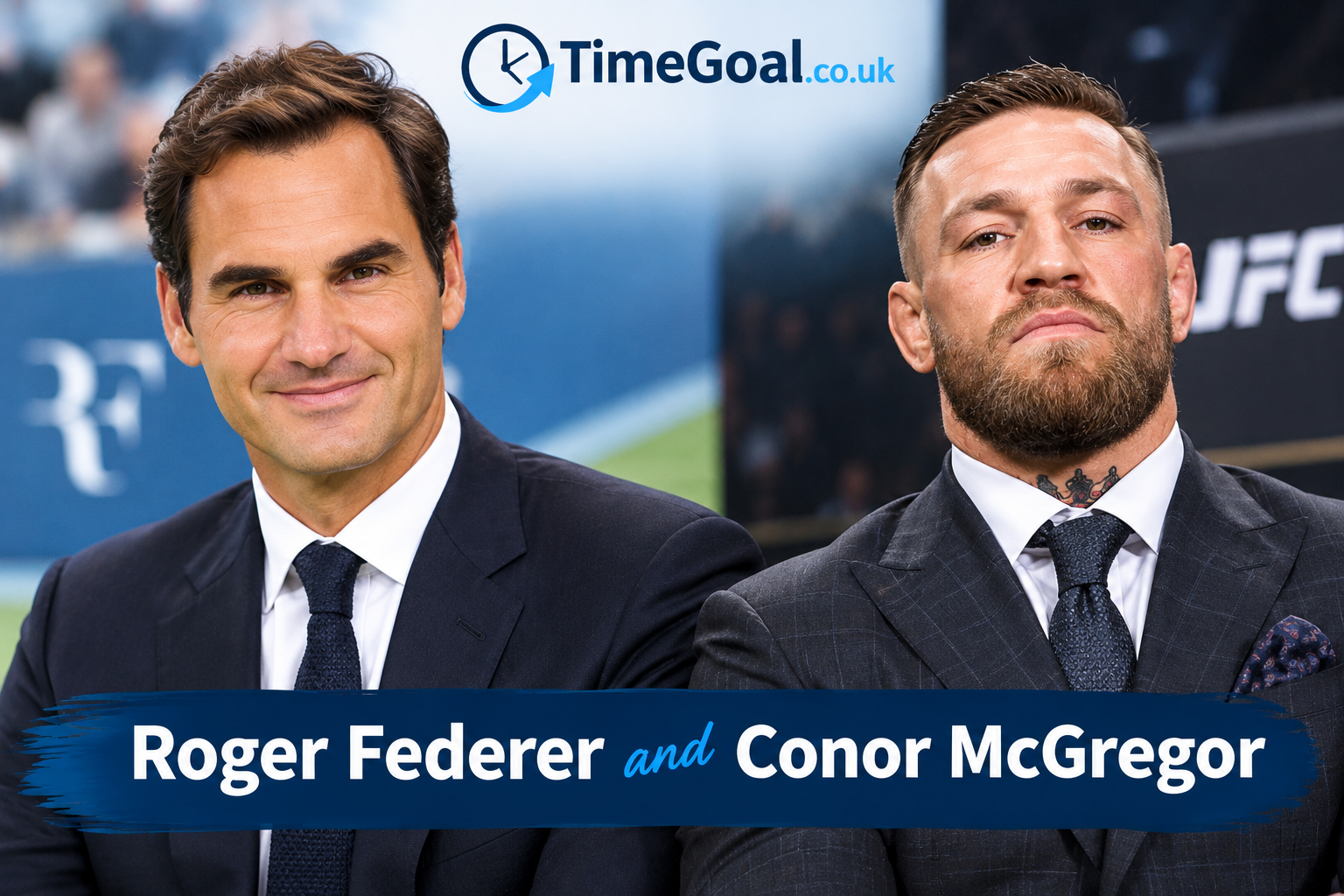
Roger Federer and Conor McGregor are two of the most recognisable names in modern sport. Although they built their reputations in different arenas, both athletes transformed their respective disciplines through exceptional talent, relentless ambition and remarkable personal branding. Federer became a symbol of elegance and consistency in professional tennis, whilst McGregor brought confidence, showmanship and unprecedented commercial attention to mixed martial arts.
The stories of Roger Federer and Conor McGregor demonstrate that sporting success can take many forms. One captivated audiences with graceful movement and extraordinary precision on the tennis court, whilst the other attracted millions of fans through explosive performances and an unmistakable personality inside and outside the octagon.
Their careers also reveal how athletes can develop into global celebrities, influence commercial markets and inspire people beyond their sporting achievements. Understanding their journeys offers valuable insight into discipline, resilience, competition and the business of modern sport.
Who Is Roger Federer?
Early Life and Tennis Beginnings
Roger Federer was born on 8 August 1981 in Basel, Switzerland. He developed an interest in tennis at a young age and showed considerable promise as a junior player. His early training helped him develop the technical skills, balance and court awareness that would later distinguish him from his competitors.
Federer joined the professional tennis circuit in 1998. His early years were a period of learning, during which he worked to control his emotions, improve his consistency and understand the demands of elite competition.
His breakthrough arrived in 2003 when he won his first Wimbledon singles title. The victory marked the beginning of an extraordinary period in which he became one of the most successful players in tennis history.
A Career Defined by Excellence
Federer’s playing style combined powerful serves, precise groundstrokes, intelligent positioning and exceptional movement. His one-handed backhand became one of the most recognisable shots in tennis, whilst his ability to adapt to different opponents made him a formidable competitor.
He won 20 Grand Slam singles titles during his career, including eight Wimbledon men’s singles championships. His achievements helped establish him as one of the greatest players the sport has ever produced.
Federer also spent 310 weeks at the top of the ATP singles rankings, including a record 237 consecutive weeks at number one. These accomplishments reflected not only his natural ability but also his sustained excellence across different seasons and playing conditions.
His Influence Beyond Tennis
Federer’s influence extended beyond trophies and rankings. His professionalism, sportsmanship and calm public image helped attract new audiences to tennis. He became a respected ambassador for the sport, demonstrating that fierce competition could coexist with courtesy and composure.
His philanthropic work also became an important part of his public identity. Through the Roger Federer Foundation, he supported educational opportunities for children, particularly in southern Africa and Switzerland.
Federer announced his retirement from professional tennis in 2022, closing a career that had shaped the modern game for more than two decades.
Who Is Conor McGregor?
Early Life and Rise in Mixed Martial Arts
Conor McGregor was born on 14 July 1988 in Dublin, Ireland. Before becoming an international sporting celebrity, he worked as an apprentice plumber whilst pursuing his interest in combat sports.
McGregor began training in mixed martial arts and quickly developed a reputation for his striking ability, confidence and willingness to take risks. His left-handed punches, movement and understanding of distance became important weapons inside the cage.
He competed professionally from 2008 and eventually joined the Ultimate Fighting Championship, commonly known as the UFC. His performances and outspoken personality helped him attract attention far beyond the traditional mixed martial arts audience.
Becoming a UFC Superstar
McGregor’s rise accelerated in 2015 when he defeated José Aldo to win the UFC featherweight championship. The contest lasted just 13 seconds, making it one of the most memorable championship victories in the organisation’s history.
In 2016, he defeated Eddie Alvarez to claim the UFC lightweight title. This achievement made him the first fighter in UFC history to hold two divisional championships simultaneously.
His success was supported by a distinctive approach to promotion. McGregor understood how to create anticipation, build rivalries and turn sporting contests into major entertainment events. His press conferences, interviews and confident predictions became central to his public image.
His Crossover into Mainstream Entertainment
McGregor reached an even wider audience in 2017 when he faced undefeated boxing champion Floyd Mayweather Jr in a professional boxing match. Although McGregor lost by technical knockout in the tenth round, the event generated enormous international interest.
The contest demonstrated his ability to cross sporting boundaries and attract audiences who might not otherwise watch mixed martial arts.
McGregor subsequently expanded his commercial activities, including the launch of Proper No. Twelve Irish whiskey. His career illustrates how athletic fame, promotional ability and business ventures can combine to create a powerful personal brand.
Roger Federer and Conor McGregor: Different Sports, Shared Ambition
Two Approaches to Competition
Roger Federer and Conor McGregor achieved success through different methods, yet both displayed an exceptional commitment to their chosen sports. Federer was widely admired for his composure, patience and tactical intelligence. McGregor became known for his aggression, confidence and ability to influence the psychological atmosphere surrounding a contest.
Federer’s approach often centred on controlling rallies, exploiting weaknesses and maintaining concentration under pressure. McGregor, by contrast, frequently sought to dictate the pace of a fight through striking, movement and carefully calculated attacks.
Despite these differences, both understood the importance of preparation. Elite performance requires physical conditioning, technical practice, mental strength and the ability to adjust when circumstances change.
Mental Strength and Confidence
Confidence played a significant role in both careers. Federer demonstrated it through calm decision-making during difficult matches, whilst McGregor expressed it through bold predictions and an assertive public personality.
Their experiences also highlight an important distinction: confidence must be supported by ability. Federer’s technical consistency enabled him to compete at the highest level for years, whilst McGregor’s most successful performances combined his self-belief with effective preparation and tactical execution.
Neither career was without setbacks. Federer experienced injuries and defeats against younger rivals, whilst McGregor faced significant competitive challenges, including championship losses and extended periods away from competition.
Their journeys show that sporting greatness involves responding to adversity rather than expecting uninterrupted success.
Comparing Their Achievements and Records
Roger Federer’s Tennis Legacy
Federer’s career is defined by sustained excellence. His 20 Grand Slam singles titles placed him among the most successful men’s tennis players of his generation. His rivalry with Rafael Nadal and Novak Djokovic became one of the defining stories of modern tennis.
These encounters offered contrasting styles and memorable contests, helping expand the sport’s international popularity. Federer also won an Olympic doubles gold medal with Stan Wawrinka in 2008 and an Olympic singles silver medal in 2012.
His achievements established a legacy based on longevity, adaptability and technical mastery.
Conor McGregor’s Championship Accomplishments
McGregor’s most significant sporting achievement was becoming the first fighter to hold UFC championships in two weight divisions simultaneously. His featherweight and lightweight title victories established him as a major figure in mixed martial arts.
His success also helped bring greater mainstream attention to the UFC. His fights frequently attracted substantial audiences, whilst his promotional approach influenced how combat sports stars presented themselves to the public.
Although his championship achievements differ from Federer’s Grand Slam record, McGregor’s influence on the commercial development of mixed martial arts remains an important part of his legacy.
Wealth, Business and Global Recognition
How Roger Federer Built His Wealth
Federer’s financial success came from a combination of prize money, sponsorship agreements, investments and business partnerships. His long association with premium brands reflected his reputation for reliability, sophistication and international appeal.
He earned substantial prize money during his playing career and secured major endorsement agreements with companies in sportswear, luxury goods and consumer products.
His investment activities also attracted attention. Federer became associated with the Swiss running-shoe company On, including through an investment and collaborative product development.
These ventures demonstrate how a successful athlete can build a commercial identity that continues to generate opportunities beyond active competition.
Conor McGregor’s Commercial Strategy
McGregor built his wealth through fight earnings, sponsorships, promotional opportunities and entrepreneurial ventures. His high-profile boxing contest with Mayweather was particularly important in establishing his earning power beyond the UFC.
His whiskey business became another prominent part of his commercial story. However, the financial details of private investments and business transactions are not always publicly available, so precise estimates of his current net worth should be treated cautiously.
Unlike Federer, whose public image has often emphasised understated elegance, McGregor has generally embraced a more provocative and attention-driven approach to promotion.
Both strategies demonstrate that commercial success depends not only on sporting ability but also on audience recognition, brand partnerships and business decisions.
Public Image and Influence on Popular Culture
Federer’s Reputation for Elegance
Federer became synonymous with grace, discipline and sportsmanship. His appearance, playing style and measured interviews made him attractive to audiences well beyond traditional tennis fans.
He demonstrated that a sporting personality could become globally influential without relying on controversy. His reputation helped strengthen tennis’s appeal to sponsors and luxury brands, whilst his rivalries gave fans compelling sporting narratives.
McGregor’s Bold and Unconventional Persona
McGregor took a different route to international recognition. His distinctive suits, memorable statements and confident interviews made him one of combat sport’s most recognisable personalities.
His promotional style attracted supporters and critics alike. Regardless of opinion, his ability to command attention transformed the presentation of mixed martial arts and helped make individual fighters central figures in the sport’s commercial success.
What Can Fans Learn from Their Careers?
The careers of Roger Federer and Conor McGregor offer several useful lessons.
- Commitment matters: Both athletes invested years in developing the skills required to compete professionally.
- Personal identity creates opportunities: Each developed a recognisable public image that strengthened his commercial appeal.
- Resilience is essential: Injuries, defeats and changing competitive circumstances challenged both athletes.
- Preparation supports confidence: Self-belief becomes more effective when combined with technical ability and disciplined training.
- Success requires adaptation: Athletes must respond to changing opponents, expectations and professional environments.
Their stories also demonstrate that ambition can be expressed in different ways. There is no single personality type required for sporting success, provided talent is supported by preparation, commitment and effective decision-making.
Conclusion
Roger Federer and Conor McGregor represent two distinct models of sporting achievement. Federer built an extraordinary tennis career through technical brilliance, consistency and an enduring reputation for sportsmanship. McGregor transformed himself from a developing mixed martial arts fighter into an international celebrity through championship performances, confidence and commercial ambition.
Their accomplishments cannot be measured using identical standards, because tennis and mixed martial arts demand different skills and reward different achievements. Nevertheless, both athletes demonstrated the power of dedication, personal branding and the ability to connect with global audiences.
Federer’s legacy rests heavily on his contribution to tennis and his remarkable record of excellence. McGregor’s legacy includes his championship success, his influence on UFC promotion and his expansion into business.
Ultimately, Roger Federer and Conor McGregor show that sporting greatness extends beyond winning. It can also involve inspiring audiences, changing public perceptions of a sport and creating opportunities that endure after an athlete’s competitive peak.
Frequently Asked Questions (FAQs)
1. Who is more successful, Roger Federer or Conor McGregor?
Both achieved success in different sporting environments. Federer won 20 Grand Slam singles titles, whilst McGregor became the first UFC fighter to hold championships in two weight divisions simultaneously.
2. How many Grand Slam titles did Roger Federer win?
Roger Federer won 20 men’s singles Grand Slam titles during his professional tennis career.
3. What made Conor McGregor famous?
McGregor became famous for his striking ability, championship victories, outspoken personality and ability to promote major sporting events.
4. Did Roger Federer and Conor McGregor compete against each other?
No. Federer competed professionally in tennis, whilst McGregor built his career in mixed martial arts and professional boxing. They have not competed against each other in an official sporting contest.
5. Who has the greater net worth?
Their exact current net worths are difficult to establish because private investments, taxes, business interests and other financial commitments are not fully disclosed. Any comparison should therefore be treated cautiously rather than presented as a definitive ranking.
6. Are Roger Federer and Conor McGregor retired?
Federer retired from professional tennis in 2022. McGregor has not announced a comparable permanent retirement from mixed martial arts, although his competitive activity has been affected by injuries and periods away from competition.
7. What is their greatest contribution to sport?
Federer is celebrated for his exceptional tennis achievements, longevity and sportsmanship. McGregor is recognised for his championship accomplishments and his role in increasing the UFC’s mainstream visibility.
8. What do their careers have in common?
Both athletes combined sporting talent with confidence, determination and commercial awareness. Their careers demonstrate how elite performance and a distinctive personal identity can create lasting international recognition. TimeGoal
