

Introduction
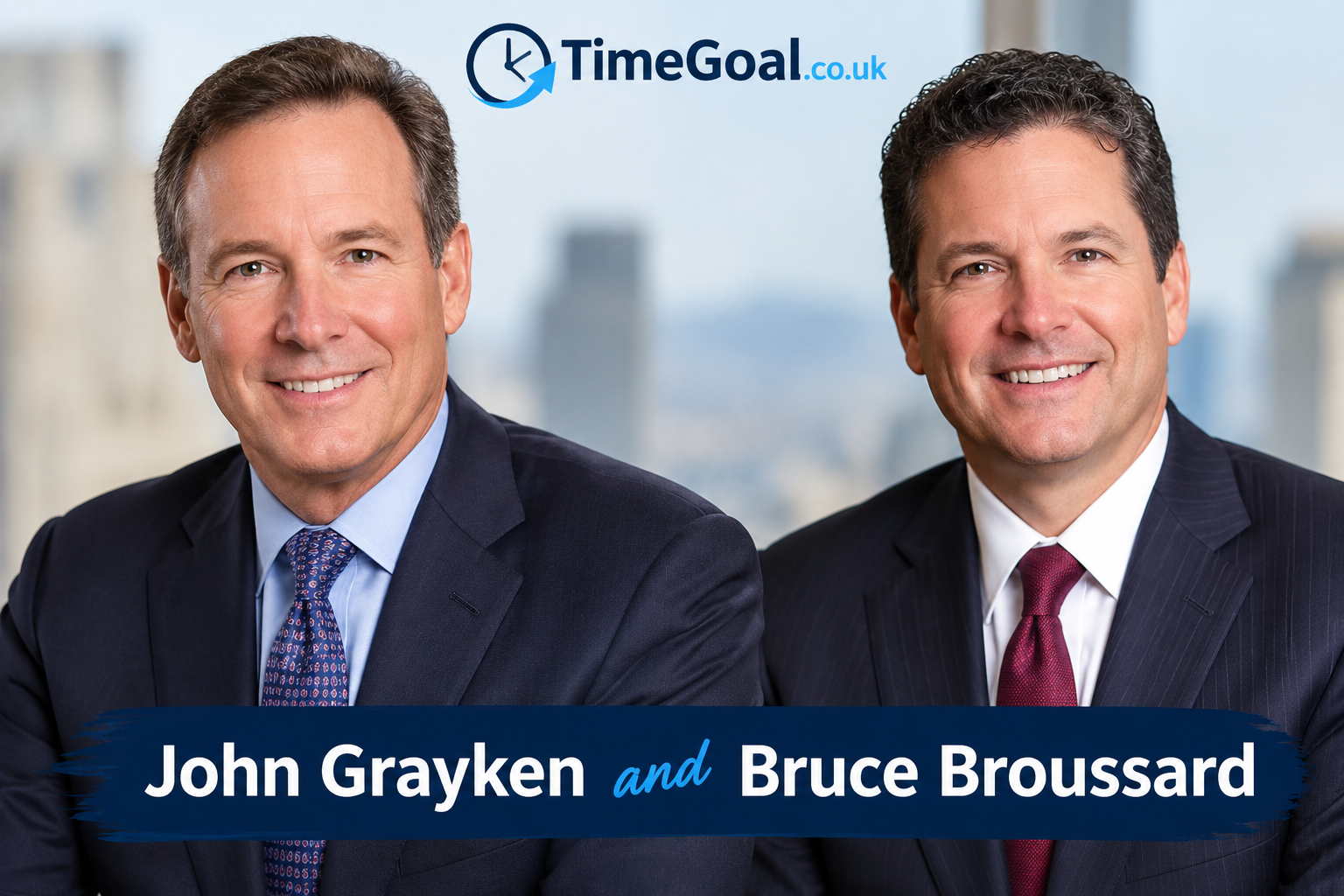
The keyword John Grayken and Bruce Broussard net worth brings together two prominent business figures whose careers reflect different approaches to wealth creation. John Grayken is widely recognised for building a fortune through private equity and distressed debt investing, while Bruce Broussard is known for his leadership in the American healthcare industry. Although both have achieved considerable financial success, their sources of wealth, professional backgrounds and approaches to business differ significantly.
Understanding their net worth requires looking beyond headline figures. Private investment fortunes are often connected to company ownership, investment performance and asset valuations, whereas executive wealth generally comes from salaries, bonuses, share awards and long-term incentive plans. These differences make it important to distinguish between publicly reported financial information and estimates that cannot be independently verified.
This article explores John Grayken and Bruce Broussard’s careers, sources of income, business achievements and financial influence, offering a clearer picture of how their professional decisions have contributed to their wealth.
Who Is John Grayken?
John Grayken is an American-born investor best known as the founder of Lone Star Funds, a global private equity firm specialising in distressed assets, real estate and financial investments. He established his reputation by identifying opportunities in markets where companies, banks or property owners faced financial difficulties.
His investment approach centres on acquiring undervalued assets, improving their financial position and seeking returns when market conditions become more favourable. This strategy can generate substantial profits, although it also involves significant risks.
John Grayken’s Early Career and Education
Grayken studied at the University of Pennsylvania and later attended Harvard Business School. His education provided a foundation in finance, business management and investment analysis.
Before establishing Lone Star Funds, he developed experience in the financial sector, including work involving distressed debt and property-related investments. These early experiences helped shape his understanding of how economic downturns can create opportunities for investors with sufficient capital and patience.
Building Lone Star Funds
Lone Star Funds became the central business behind Grayken’s financial success. The firm has operated internationally, investing in assets across different economic cycles and geographical markets.
Its activities have included investments in real estate, corporate debt, financial institutions and other distressed assets. Rather than relying primarily on an executive salary, Grayken’s wealth is associated with his ownership interest in an investment business and the returns generated through its funds.
Why Distressed Investing Can Create Significant Wealth
Distressed investing involves purchasing assets whose prices have fallen because of financial pressure, restructuring, economic uncertainty or changes in market conditions.
Successful investors may benefit when these assets recover in value. However, profits are not guaranteed. Some investments require lengthy restructuring, additional capital or difficult negotiations before they produce a return.
Grayken’s career demonstrates how specialised investment strategies can create substantial wealth when supported by capital, financial expertise and effective risk management.
John Grayken Net Worth: Sources of His Fortune
John Grayken’s net worth is generally discussed in the context of billionaire wealth. However, an exact figure should be treated cautiously because the value of his private business interests and investment holdings is not fully available through public disclosures.
Private Equity and Investment Returns
The principal source of Grayken’s fortune is associated with Lone Star Funds and its investment activities. Private equity firms typically generate income through management fees and investment-related earnings, subject to the structure of their funds and the performance of their portfolios.
Founders and senior owners may receive a share of investment profits, commonly known as carried interest, when the applicable conditions are met. Such earnings can be substantial when investments perform well.
International Investments and Asset Ownership
Grayken’s investment activities have extended across international markets. Exposure to property, corporate debt and other financial assets can diversify income opportunities, although it can also introduce currency, regulatory and economic risks.
The value of private investments may change considerably over time. As a result, estimates of Grayken’s wealth can differ depending on the assets included, the valuation date and the assumptions used by the source.
Personal Wealth Versus Managed Capital
An important distinction is that the money managed by Lone Star Funds is not equivalent to Grayken’s personal net worth. Investment firms manage capital on behalf of investors, and those funds remain subject to contractual arrangements and investment obligations.
His personal fortune depends on his ownership interests, personal investments and other assets, rather than the total value of the firm’s managed portfolio.
Who Is Bruce Broussard?
Bruce D. Broussard is an American business executive recognised for his leadership in healthcare management, particularly through his long tenure at Humana, one of the major health insurance and healthcare services companies in the United States.
Unlike Grayken, whose fortune is associated with private investment ownership, Broussard built his financial position primarily through executive leadership, corporate compensation and equity-based rewards.
Bruce Broussard’s Education and Professional Background
Broussard studied accounting and began his career in business and consulting. His early professional experience introduced him to healthcare, a sector that would eventually become the foundation of his career.
He progressed through senior management positions at US Oncology, where he served in several leadership roles, including chief financial officer, president and chief executive officer. Following the acquisition of US Oncology by McKesson, Broussard continued to develop his reputation as an experienced healthcare executive.
Leadership at Humana
Broussard became president of Humana in 2011 and took over as chief executive officer in January 2013. He led the company for more than a decade, overseeing a period of significant change in the American healthcare market.
His leadership focused on health insurance, integrated healthcare services, member experience and the development of care delivery businesses. Humana also expanded its emphasis on primary care and services for older adults, reflecting wider changes in healthcare delivery and Medicare-related markets.
His Impact on the Healthcare Industry
Broussard’s tenure coincided with growing demand for coordinated care, rising healthcare costs and increasing competition among insurers. His leadership experience helped position him as an influential figure in healthcare administration.
After stepping down as Humana’s chief executive, he continued to pursue opportunities in the healthcare investment sector. In 2024, he joined Define Ventures as a venture partner, bringing his industry knowledge to a firm investing in healthcare technology and related businesses.
Bruce Broussard Net Worth: How Did He Build His Wealth?
The precise net worth of Bruce Broussard is not established by a consistently verified public figure. Although some websites publish estimates of executive fortunes, these should not automatically be treated as confirmed financial facts.
His publicly documented compensation provides a more reliable starting point for understanding his financial success.
Executive Salary and Annual Bonuses
As chief executive of a major publicly traded company, Broussard received a substantial salary and could earn additional compensation through performance-related incentives.
Senior executive remuneration often depends on corporate performance, strategic objectives and shareholder returns. These arrangements are designed to connect leadership rewards with the company’s longer-term results.
However, annual compensation represents income earned during a particular period, not the executive’s total accumulated wealth.
Stock Awards and Long-Term Incentives
Equity compensation was another important component of Broussard’s earnings at Humana. Public company executives commonly receive restricted shares, performance-based stock awards or stock options.
Humana’s 2025 proxy statement reported that Broussard received total compensation of approximately $12.1 million for 2024, his final year as chief executive. The reported figure included approximately $8 million in stock awards, alongside salary, incentive compensation and other benefits.
This information illustrates the importance of equity-based remuneration in senior corporate positions. Nevertheless, the reported value of stock awards does not necessarily equal the cash ultimately received, and it should not be confused with net worth.
Post-Humana Business Opportunities
Broussard’s appointment as a venture partner at Define Ventures provided another avenue for applying his expertise in healthcare innovation and business development.
Venture capital-related roles can involve a combination of compensation, investment opportunities and other contractual arrangements. However, the specific financial terms of Broussard’s role have not been fully established through public information.
Consequently, any estimate of his overall fortune should be regarded as provisional rather than definitive.
John Grayken and Bruce Broussard Net Worth Compared
John Grayken and Bruce Broussard represent two different paths to financial success. One built a fortune through private investment, while the other developed wealth through corporate leadership and compensation.
| Financial factor | John Grayken | Bruce Broussard |
|---|---|---|
| Main industry | Private equity and investment | Healthcare and health insurance |
| Primary wealth source | Investment business ownership and returns | Salary, incentives and equity awards |
| Major organisation | Lone Star Funds | Humana |
| Financial position | Widely recognised billionaire investor | Wealth accumulated through executive leadership |
| Public financial information | Billionaire estimates and investment disclosures | Corporate compensation disclosures |
| Main valuation challenge | Private holdings and investment valuations | Private assets, investments and accumulated equity |
Who Has the Higher Net Worth?
Available billionaire rankings place Grayken’s estimated wealth in the multi-billion-dollar range. His position as the founder and chairman of Lone Star Funds gives him exposure to investment returns that can significantly exceed the annual compensation available to most corporate executives.
Broussard’s disclosed executive compensation demonstrates substantial earning power, but it does not establish a comparable billionaire fortune.
On the available evidence, Grayken is considerably wealthier than Broussard. However, an exact comparison is difficult because Broussard’s complete personal balance sheet is not publicly available and private wealth estimates can change over time.
What Can Be Learned from Their Financial Success?
Different Routes to Building Wealth
Grayken’s career illustrates the potential financial rewards of establishing and growing an investment management business. His success depends on identifying opportunities, raising capital, managing risk and generating investment returns.
Broussard’s career demonstrates how specialised expertise, corporate leadership and long-term professional advancement can produce substantial financial rewards.
Neither route is without challenges. Investment businesses face market volatility and losses, while corporate executives must navigate competition, regulation, operational pressures and shareholder expectations.
The Importance of Long-Term Strategy
Both careers highlight the value of long-term decision-making. Grayken built an investment platform that has operated across multiple economic cycles, while Broussard spent years developing his experience in healthcare management.
Their professional histories also demonstrate that wealth accumulation depends on more than income alone. Ownership, investment decisions, financial discipline and the ability to adapt to changing industries can all influence long-term financial outcomes.
Frequently Asked Questions
What is John Grayken’s net worth?
John Grayken’s net worth is estimated in the billions of US dollars. His fortune is primarily associated with Lone Star Funds and his investments. The precise amount fluctuates with asset valuations and investment performance.
What is Bruce Broussard’s net worth?
Bruce Broussard‘s exact net worth has not been reliably established through comprehensive public disclosures. His wealth is associated with his senior healthcare executive career, including salary, bonuses and stock-based compensation.
How did John Grayken make his money?
Grayken built his fortune through private equity and distressed asset investing. His firm, Lone Star Funds, invests in opportunities involving real estate, corporate debt and other financial assets.
How did Bruce Broussard accumulate his wealth?
Broussard accumulated wealth through executive positions in the healthcare industry, particularly his leadership role at Humana. His compensation included salary, incentives and equity awards.
Who is richer, John Grayken or Bruce Broussard?
Available wealth estimates indicate that John Grayken is substantially wealthier. His investment business has generated a multi-billion-dollar personal fortune, while Broussard’s financial position is less comprehensively documented.
Conclusion
The comparison of John Grayken and Bruce Broussard net worth highlights two distinct models of financial achievement. Grayken established his fortune through private equity, distressed investments and ownership of an international investment management business. Broussard developed his financial position through years of leadership in the healthcare sector, particularly during his tenure at Humana.
Although both have achieved significant professional success, Grayken’s estimated billionaire wealth places him in a different financial category. Broussard’s career, meanwhile, demonstrates the considerable earning potential of executive leadership and specialised industry knowledge.
Ultimately, their stories show that financial success can emerge through different routes. Understanding the sources of their wealth, the limitations of public estimates and the distinction between income and net worth provides a more accurate perspective on their respective financial achievements. TimeGoal
