

Introduction
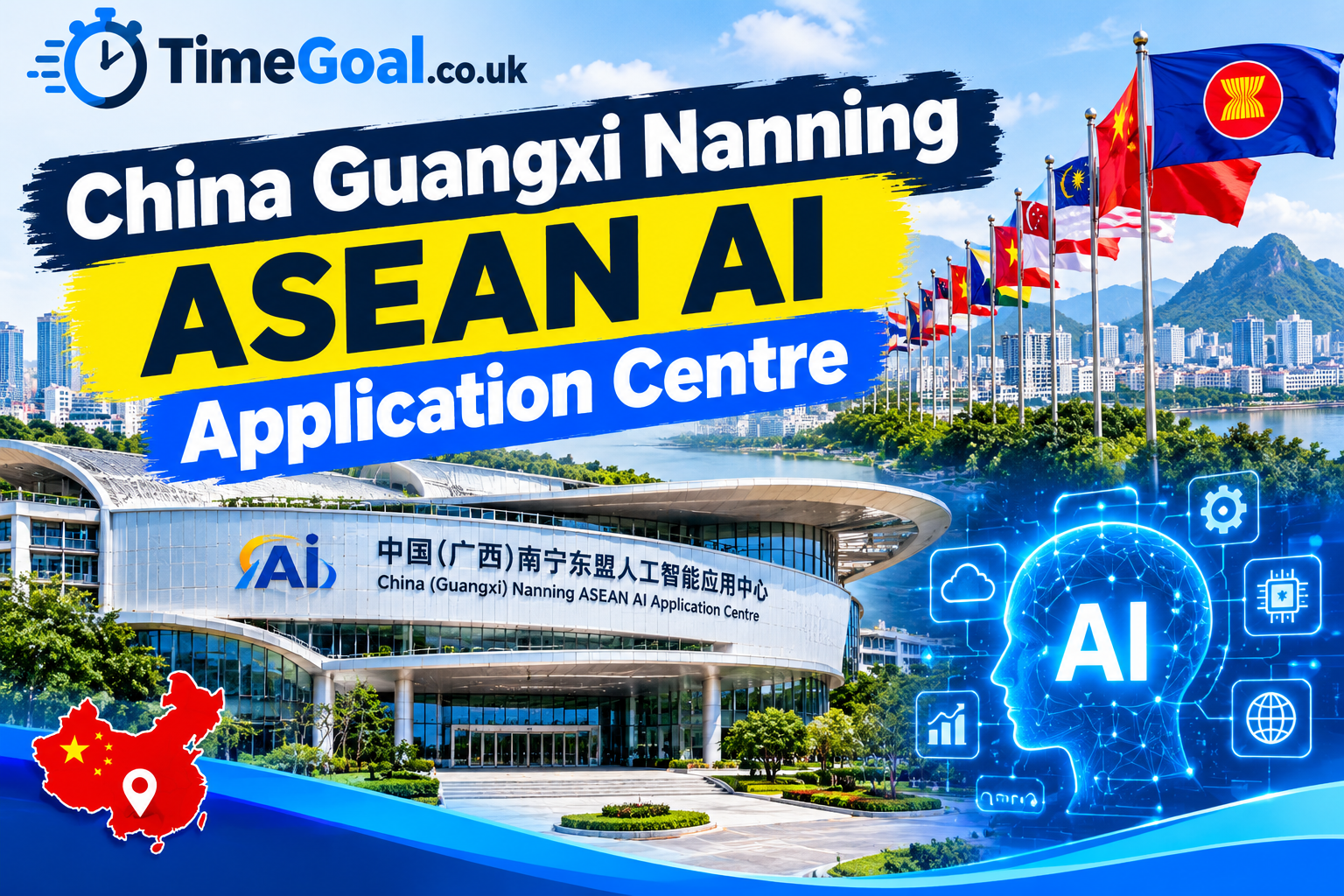
Artificial intelligence is transforming industries, reshaping businesses and creating new opportunities for international cooperation. Across Asia, countries are investing in intelligent technologies to improve productivity, strengthen digital infrastructure and develop more efficient public services. Within this evolving landscape, the China Guangxi Nanning ASEAN AI Application Centre represents an important area of interest for understanding how China and the Association of Southeast Asian Nations (ASEAN) can work together to advance artificial intelligence.
Nanning, the capital of Guangxi Zhuang Autonomous Region in southern China, occupies a strategic position in China’s engagement with South-east Asia. Its geographical location, regional trade connections and established role in China–ASEAN cooperation make it a natural setting for exploring opportunities in artificial intelligence, digital trade and technological innovation.
An AI application centre in this setting can help connect research, commercial development and practical implementation. By encouraging collaboration between technology companies, universities, government organisations and regional partners, such an initiative can support the development of solutions tailored to real-world needs.
What Is the China Guangxi Nanning ASEAN AI Application Centre?
The China Guangxi Nanning ASEAN AI Application Centre can be understood as a technology-focused concept associated with the application of artificial intelligence and closer digital cooperation between China and ASEAN countries. Its central area of interest is the practical use of AI to address business, industrial and social challenges.
Rather than focusing exclusively on theoretical research, an AI application centre typically aims to connect technological capabilities with practical requirements. These may include intelligent manufacturing, agricultural innovation, digital commerce, language processing, logistics management and public-service improvements.
It is important to distinguish the centre’s broader potential from officially confirmed details about its facilities, ownership, investment, operational status and individual programmes. These particulars should be established through reliable announcements before being presented as verified facts.
Understanding the China–ASEAN Connection
ASEAN is a regional organisation comprising ten member states: Brunei Darussalam, Cambodia, Indonesia, Laos, Malaysia, Myanmar, the Philippines, Singapore, Thailand and Viet Nam.
China has extensive economic and trade relationships with these countries. As businesses increasingly depend on digital systems, AI offers opportunities to improve cross-border communication, automate routine processes and make supply chains more efficient.
A centre located in Nanning could help businesses and institutions explore these opportunities by bringing together technical expertise, commercial partners and regional knowledge.
Why Artificial Intelligence Matters
Artificial intelligence enables computer systems to perform tasks that traditionally require human intelligence, including recognising patterns, processing language, analysing information and supporting decisions.
Its applications range from customer-service chatbots to advanced industrial inspection systems. However, successful adoption requires more than purchasing sophisticated software. Organisations also need reliable data, suitable infrastructure, trained professionals and clear rules governing privacy and accountability.
An effective AI application centre can help bridge the gap between technological possibilities and practical implementation.
Why Nanning Is an Important Location
Nanning’s significance comes partly from its geographical position and its relationship with regional economic cooperation. As the capital of Guangxi, it serves as an administrative, commercial and transport centre for southern China.
The city has also developed a prominent role in China–ASEAN engagement, including through the China–ASEAN Expo and related economic activities. These connections provide a useful foundation for discussions about digital collaboration.
A Gateway to South-east Asian Markets
Nanning’s regional connections can help businesses understand the opportunities and challenges involved in serving South-east Asian markets. Although each ASEAN country has different regulations, languages, infrastructure and consumer preferences, shared technological challenges can create opportunities for cooperation.
For example, companies operating across borders may need multilingual customer support, automated document processing and better demand forecasting. AI tools can assist with these tasks when they are designed around local requirements.
Supporting Regional Business Relationships
Technology partnerships are most effective when they address genuine commercial needs. A business in China may require assistance understanding a South-east Asian market, while an ASEAN company may seek access to AI expertise, technical training or digital infrastructure.
A collaborative centre could provide a setting for pilot projects, demonstrations, professional exchanges and discussions between businesses. Such activities would help partners assess whether proposed technologies are useful, affordable and suitable for their markets.
Key Areas of AI Application
The value of an AI application centre depends largely on the practical problems it helps solve. Several sectors offer promising opportunities for cooperation between Guangxi and ASEAN partners.
1. Smart Manufacturing
Manufacturers increasingly use AI to inspect products, predict equipment failures and improve production planning. Computer vision systems can identify defects, while predictive maintenance tools analyse equipment data to detect possible problems before machinery breaks down.
For factories, these capabilities can reduce waste, improve consistency and support more efficient use of resources.
An application centre could help manufacturers evaluate suitable technologies, train employees and test systems before introducing them across an entire production line.
2. Agriculture and Food Production
Agriculture remains important across much of South-east Asia. AI can support crop monitoring, pest detection, irrigation planning and agricultural forecasting.
For instance, image-recognition systems may help identify signs of plant disease, while weather and soil data can support decisions about watering and fertilisation.
Cooperation between Chinese technology providers and ASEAN agricultural organisations could help develop tools adapted to local crops, climates and farming practices.
3. Cross-Border Trade and Logistics
Regional commerce depends on the efficient movement of goods, accurate documentation and reliable supply chains. AI can analyse shipping information, forecast demand, identify potential delays and automate parts of administrative workflows.
For businesses operating between China and ASEAN markets, these capabilities may improve visibility across complex supply networks.
However, practical results depend on the quality and accessibility of data, as well as compatibility between the systems used by different organisations.
4. Language Translation and Communication
Language differences can create barriers to international business. AI-powered translation, speech recognition and document-processing tools can help people communicate across languages.
A centre serving China–ASEAN cooperation could explore language technologies for business meetings, tourism, education and customer support.
Such systems must be tested carefully because literal translations may fail to capture cultural context, technical terminology or legal meaning.
5. Digital Commerce and Customer Services
Online businesses can use AI to recommend products, analyse customer behaviour, forecast sales and automate routine enquiries.
For small and medium-sized enterprises, these tools may make it easier to compete in digital markets without requiring large customer-service teams.
Nevertheless, businesses must use customer information responsibly and avoid systems that produce misleading recommendations or unfair outcomes.
Potential Benefits for China and ASEAN
The development of AI-focused cooperation can create benefits beyond the technology sector. Its broader value lies in helping organisations improve efficiency, develop skills and discover new commercial opportunities.
Encouraging Innovation and Investment
An application centre can provide a meeting point for technology developers, investors, research institutions and businesses. By bringing these groups together, it may help promising ideas progress from early-stage experiments to practical products and services.
Pilot projects are particularly valuable because they allow organisations to test performance, costs and risks before committing to large-scale investment.
Developing Digital Skills
The expansion of artificial intelligence is increasing demand for professionals who understand data analysis, software development, cybersecurity and responsible technology management.
Training initiatives, technical workshops and university partnerships could help build these capabilities. For young professionals and students, such opportunities may provide valuable experience in emerging industries.
Supporting Small and Medium-Sized Enterprises
Smaller businesses often face financial and technical barriers when adopting advanced technology. They may lack specialist employees, suitable computing infrastructure or the resources needed to develop customised software.
An accessible AI application centre could help businesses identify appropriate tools, understand implementation costs and develop realistic adoption strategies.
Challenges Facing AI Development
Despite its potential, artificial intelligence presents several challenges that must be addressed for regional cooperation to succeed.
Data Privacy and Cybersecurity
AI systems frequently depend on substantial quantities of data. Businesses must ensure that personal information, commercial records and sensitive operational details are handled securely.
Cross-border projects can introduce additional complexity because participating countries may have different data-protection requirements.
Clear governance procedures, secure infrastructure and appropriate access controls are essential for maintaining trust.
Technical Infrastructure and Costs
AI applications may require reliable connectivity, computing resources and well-maintained data systems. These requirements can create difficulties for organisations with limited budgets or outdated infrastructure.
Projects should therefore begin with clearly defined objectives and realistic budgets rather than assuming that expensive technology will automatically improve performance.
Language and Cultural Differences
ASEAN countries represent diverse linguistic and cultural environments. An AI system that performs well in one market may produce less accurate results in another because of differences in language, terminology or local practices.
Developers need local expertise, representative training data and extensive testing to ensure that applications are appropriate for their intended users.
Responsible and Transparent AI
AI systems can make mistakes, reproduce biases or generate inaccurate information. In sectors such as finance, healthcare and public administration, these problems may have serious consequences.
Organisations should establish appropriate human oversight, evaluate system performance and provide ways to identify and correct errors. Responsible development is essential for ensuring that innovation benefits businesses and communities.
The Future of the China Guangxi Nanning ASEAN AI Application Centre
The future significance of the China Guangxi Nanning ASEAN AI Application Centre will depend on how effectively AI capabilities are translated into measurable outcomes.
One promising direction is the development of practical demonstration projects. Instead of concentrating solely on technology showcases, participants could evaluate AI solutions against clear objectives, such as reducing manufacturing waste, improving translation accuracy or shortening document-processing times.
Another opportunity involves stronger links between universities, vocational institutions and industry. Collaborative research and professional training could help create a workforce capable of developing, implementing and maintaining AI systems.
Regional partnerships could also encourage the exchange of technical knowledge and experience. Such cooperation would be most effective when projects reflect the specific needs of participating countries rather than relying on a single solution for every market.
The Role of Emerging Technologies
Future AI applications may increasingly combine machine learning with robotics, the Internet of Things, cloud computing and advanced data analytics.
In manufacturing, connected sensors could provide information that helps AI systems predict maintenance requirements. In logistics, intelligent forecasting could improve inventory management. In agriculture, connected monitoring equipment could help farmers make more informed decisions.
However, the success of these applications will depend on practical considerations, including affordability, reliability, security and ease of use.
Measuring Long-Term Success
A centre’s achievements should be assessed through tangible indicators rather than publicity alone. Useful measures might include the number of successful pilot projects, businesses adopting developed solutions, professionals receiving training and improvements in operational efficiency.
Additional indicators could include research partnerships, local technology development and the long-term sustainability of commercial projects.
Transparent reporting would help partners understand which initiatives deliver value and which require improvement.
Conclusion
The China Guangxi Nanning ASEAN AI Application Centre reflects a wider opportunity to connect artificial intelligence with regional economic cooperation. Nanning’s position in Guangxi and its established China–ASEAN connections make the city a relevant setting for exploring digital innovation, commercial partnerships and technology development.
Potential applications include smart manufacturing, agriculture, logistics, translation and digital commerce. These areas offer practical ways for businesses and institutions to investigate AI’s benefits while developing new skills and strengthening regional relationships.
Nevertheless, lasting progress requires reliable infrastructure, responsible data management, skilled professionals and careful evaluation of results. The centre’s specific achievements and operational arrangements should be judged using verifiable information rather than assumptions.
Ultimately, the greatest value of AI cooperation lies in solving real problems. By prioritising practical applications, regional collaboration and responsible innovation, initiatives associated with Nanning could contribute to a more connected and technologically capable China–ASEAN business environment.
Frequently Asked Questions (FAQs)
1. What is the China Guangxi Nanning ASEAN AI Application Centre?
It is a term associated with artificial intelligence applications and China–ASEAN technological cooperation. Its precise institutional structure and activities should be confirmed through reliable official information.
2. Why is Nanning important for AI cooperation?
Nanning is the capital of Guangxi and an established location for China–ASEAN economic engagement. Its regional connections provide opportunities to explore digital trade, technology partnerships and innovation.
3. Which industries could benefit from AI applications?
Potential sectors include manufacturing, agriculture, logistics, education, digital commerce and language services. The benefits depend on the technology used and the needs of individual organisations.
4. Can small businesses benefit from an AI application centre?
Yes. Businesses may benefit from training, demonstrations, technical guidance and opportunities to test AI tools before investing in wider implementation.
5. What challenges could affect AI cooperation?
Important challenges include data privacy, cybersecurity, implementation costs, language differences, technical infrastructure and the need for responsible AI governance.
6. What could determine the centre’s future success?
Its long-term success would depend on practical results, effective regional partnerships, skilled professionals, responsible technology use and measurable benefits for businesses and communities. TimeGoal
